
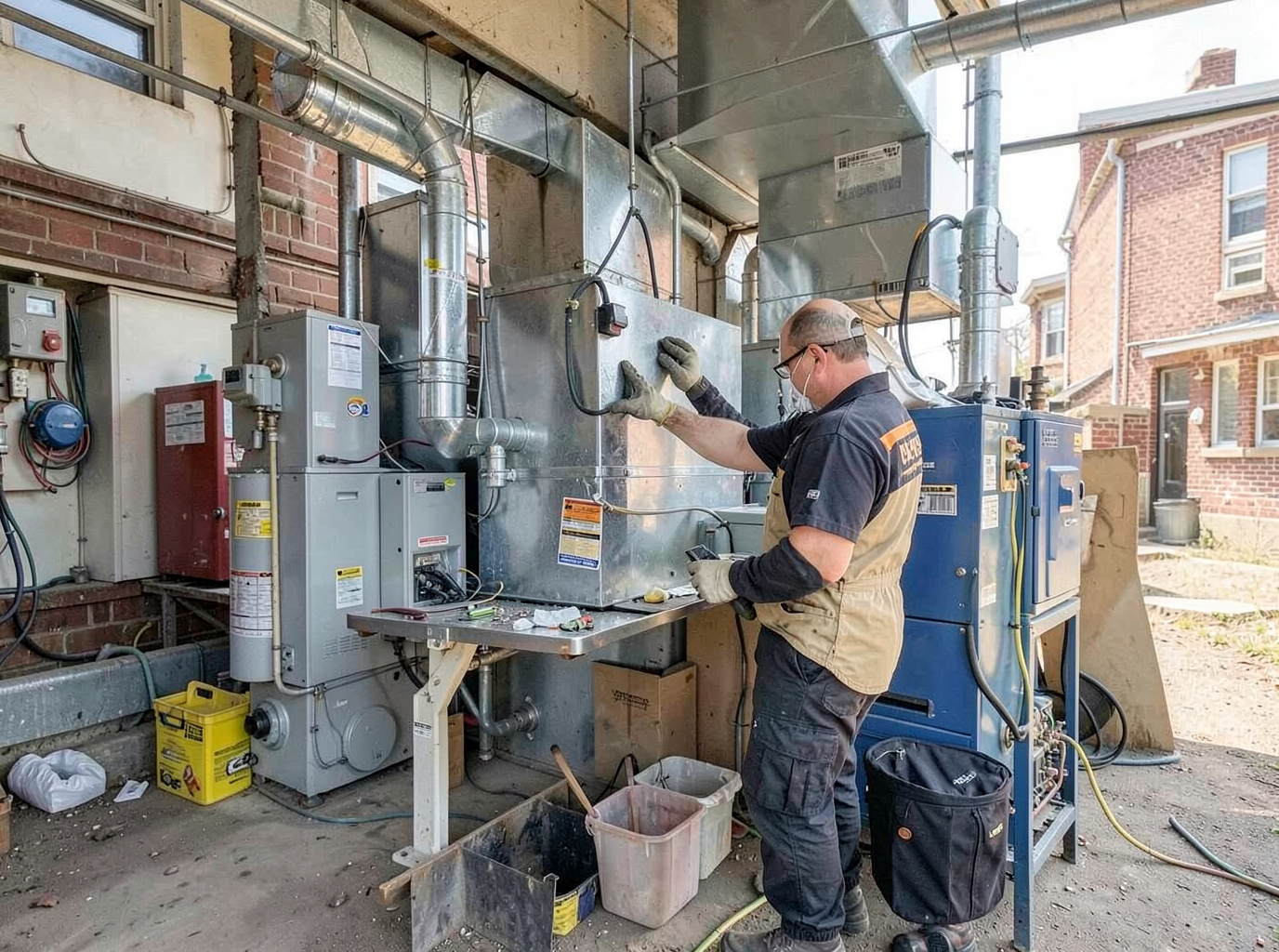
Homes in West Milford face a different set of HVAC conditions than the rowhouses and apartment buildings we work on in Jersey City. Much of the township's housing stock is single-family, built across several decades, with many older ranch and split-level homes in neighborhoods off Route 23 and Macopin Road. Many of these houses were built around oil or propane heat, and some still have older ductwork in crawlspaces or attics. When we do HVAC installation here, we start by measuring the existing duct runs, checking the furnace or air handler location, and confirming the electrical service can handle a modern heat pump or central air unit before we quote.
Winters in the Highlands are colder and longer than in Hudson County, and the wind exposure on hilltop lots near Newfoundland can strain older equipment. Because we are based in Jersey City, a West Milford job means a longer drive up Route 80 and Route 23, so we plan these visits carefully and try to complete repair and install work in one trip. Our hours are Monday through Friday, 8am to 6pm, and Saturday, 9am to 2pm. We give upfront quotes so you know the cost before any work begins.
Around West Milford
We regularly work near:
- 📍Greenwood Lake, along the township's northwestern edge
- 📍Route 23, the main north-south corridor through West Milford
- 📍Route 202, which runs through the township's central commercial area
- 📍Lake Ryerson, a residential lake community in the township
- 📍The Newfoundland section of West Milford, near the Route 23 corridor
Hvac Installation in West Milford — Local Notes
- •Many West Milford homes sit on sloped or wooded lots with limited access for condenser pads and line sets, so outdoor unit placement often needs more planning than a flat suburban yard.
- •Lakefront and lake-adjacent properties near Greenwood Lake and Lake Ryerson can have higher humidity in summer, which makes proper sizing and dehumidification part of the installation discussion, not an afterthought.
- •Well water is common in the outlying parts of the township, so we check condensate and drainage routes carefully and avoid assuming municipal sewer connections for every install.
- •Older homes with oil-fired boilers or hot water baseboard are frequently still in use, and converting them to heat pumps or ducted systems requires checking existing pipe and wall layouts first.
- •Snow and ice load near the condenser in winter is a real factor here, so we discuss pad height and clearance with homeowners before installing outdoor units.