
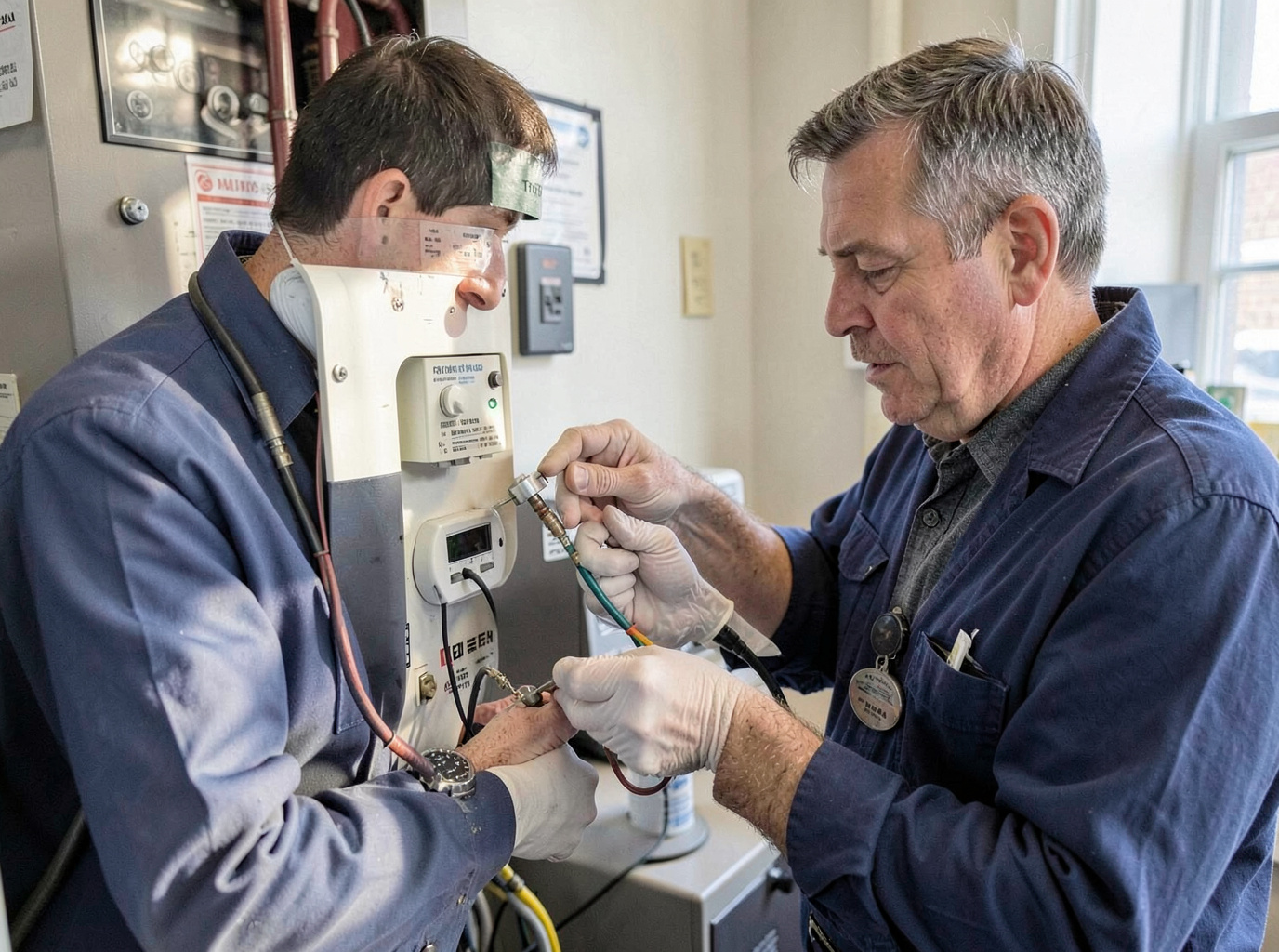
A thermostat looks like the simplest part of a heating and cooling system, but in Jersey City it is often the point where an older home's wiring and controls first cause trouble. Many rowhouses and multifamily buildings around Downtown, Journal Square, Bergen-Lafayette, and the Heights were wired decades before anyone imagined a smart thermostat. Most conventional units run on 24-volt low-voltage control wiring, and the thermostat needs a common wire, usually called the C-wire, to stay powered. Plenty of older installations never had one, so a new smart unit either drains its batteries, cycles the furnace or air handler unexpectedly, or refuses to power up. Before we swap anything, we check which terminals are actually in use, whether a spare conductor exists in the bundle, and whether the transformer and control board can handle the load. Sometimes a simple adapter solves it, and sometimes the right answer is running a new wire.
Line-voltage and millivolt systems deserve special attention because they are common in older Jersey City buildings. Electric baseboard heat and some older hydronic setups use 120 or 240 volt thermostats, and those cannot be replaced with a standard low-voltage smart unit without the correct parts or a different control approach. Millivolt systems, often tied to older gas wall heaters or boilers with a pilot, use a thermostat that works on a tiny generated current and will misbehave if mismatched. Heat pumps add another layer. They need proper configuration for auxiliary and emergency heat, reversing valve settings, and sometimes a dedicated wire for the auxiliary stage. A thermostat set up incorrectly on a heat pump can leave the backup heat running in cold weather and quietly run up the electric bill, which is a frequent surprise in winter once temperatures drop across Hudson County.
Thermostat replacement is also where good documentation pays off. Before removing the old unit, we photograph the wiring and label each terminal, because a mislabeled wire is the most common cause of a failed swap. We confirm the system type, check the equipment nameplate, and verify that the new thermostat supports the number of heating and cooling stages in the system. Mounting location matters too. A thermostat on an exterior wall, near a supply register, or in direct sun reads inaccurately, and no programming fixes a bad reading. Once installed, we walk through the schedule, test each mode, and confirm the system actually calls for heat and cooling as expected. The job is usually short, but getting the wiring right the first time is what keeps it from becoming a callback.
Technician insight
In Jersey City, the thing that catches most people out with thermostat replacement is the missing C-wire in older rowhouses and converted apartments. The new smart thermostat looks like it should just work, then the batteries die or the furnace starts short-cycling because the unit has no reliable power. Before buying anything, have someone check whether the existing wire bundle includes a spare conductor, since that tells you which fix will work.
Smart Thermostat That Kept Losing Power in a Journal Square Walk-Up
A homeowner in a Journal Square walk-up installed a Wi-Fi thermostat that kept dropping offline and draining its batteries, and the furnace would sometimes cycle without warning. On inspection, the old thermostat wiring had no common wire, so the new unit was trying to draw power through the heating and cooling circuits. We added a compatible power adapter at the furnace control board, confirmed the terminal labels against the manufacturer's diagram, and set the heating and cooling schedule. The thermostat has stayed powered and online since, and the furnace runs on its normal cycle.
Thermostat Replacement Services We Offer
✓Smart Thermostat Installation
Installs Wi-Fi learning or app-controlled thermostats configured for your system, so you can adjust temperatures remotely and track energy use without guessing at the wiring.
✓C-Wire Installation and Adapters
Adds the common wire a smart thermostat needs to stay powered, or uses a compatible power adapter when running new wire isn't practical in a plaster-walled apartment.
✓Heat Pump Thermostat Replacement
Sets up heat pump controls correctly, including auxiliary and emergency heat settings, so backup electric heat only runs when it should.
✓Multi-Stage Thermostat Replacement
Matches two-stage or multi-stage heating and cooling equipment with the right thermostat so the system runs at the lower stage most of the time and uses less energy.
✓Line-Voltage Thermostat Replacement
Replaces 120 or 240 volt thermostats used with electric baseboard or other line-voltage heat with compatible controls, handling the higher-voltage wiring safely.
✓Millivolt Thermostat Replacement
Replaces millivolt thermostats on older gas wall heaters and some boilers with a unit that matches the low-current signal, avoiding the nuisance shutdowns caused by mismatched parts.
✓Thermostat Relocation
Moves a thermostat away from drafts, sunlight, or supply vents to a wall that reads the room's real temperature, which often improves comfort without changing the equipment.
Thermostat Replacement Cost in New Jersey, Jersey City
| Service | Typical Range | What Affects It |
|---|---|---|
| Basic programmable thermostat replacement | $100–$250 | Simple low-voltage system with existing wiring that matches the new unit's requirements. |
| Smart thermostat installation | $180–$400 | Price depends on the thermostat model and whether the existing wiring already includes a common wire. |
| C-wire addition or power adapter | $75–$200 | Cost rises when new wire must be run through finished walls, plaster, or multiple floors. |
| Heat pump or multi-stage thermostat replacement | $250–$450 | Extra stages, auxiliary heat settings, and reversing valve configuration add setup time. |
| Line-voltage thermostat replacement | $150–$350 | Higher-voltage work on baseboard heat costs more, and local permit requirements can add to the total. |
Ranges are typical for New Jersey, Jersey City and confirmed with an exact written quote before any work starts.
How it works
- 1
Check the System and Wiring
We identify the heating and cooling equipment, read the nameplate, and inspect the existing wires and terminals. This tells us whether a common wire is present, what voltage the system uses, and how many stages it needs.
- 2
Confirm the Right Thermostat
Based on the wiring and equipment, we recommend a specific model and explain any adapters, new wire runs, or setting changes it requires. You get an upfront quote before any work begins.
- 3
Install and Label
We remove the old unit, label each wire, mount the new thermostat on a suitable wall, and connect it according to the manufacturer's wiring diagram. Line-voltage work is scoped separately so you know exactly what is involved.
- 4
Configure and Test
We set the mode, schedule, and heat pump or stage settings, then test heating and cooling to confirm the system responds correctly. We walk you through the controls so you can adjust them on your own.
Pricing
Thermostat replacement is usually one of the most affordable HVAC service calls, but the final price depends on the wiring and the type of system. We give an upfront quote after checking your equipment, so there are no surprises once the work starts.