
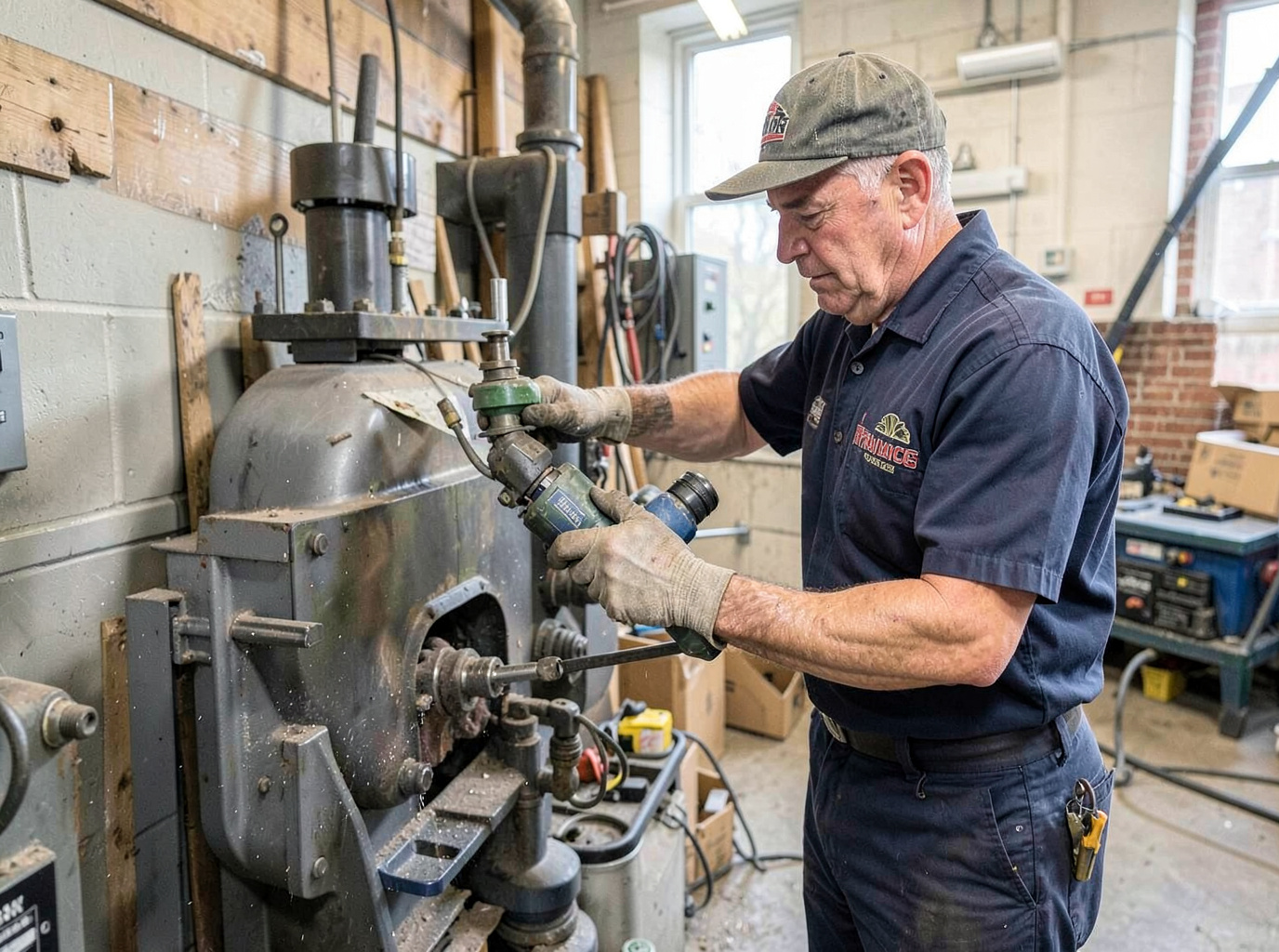
Most furnace calls in Jersey City come from the same few places: a basement gas unit in a brownstone or two-family row house that has quietly been short-cycling for weeks, or a forced-air system in a converted Heights or Bergen-Lafayette building that stopped heating on the first cold snap of November. Our first job is not to swap parts. We pull the cover, check the gas pressure and manifold readings, look at the flame sensor and ignitor, and confirm the draft is pulling properly through the flue. A furnace that runs and then shuts off usually has a reason: a dirty sensor, a cracked inducer housing, a control board with failing relays, or a blocked return that is starving the heat exchanger and tripping the high-limit switch. Replacing the part that failed first is rarely the cheapest path if the root cause is still there.
Older housing stock in Hudson County adds wrinkles you do not see in newer suburban construction. Pre-war buildings in Journal Square and Greenville often have undersized or improvised ductwork, chimney flues that were relined decades ago, and shared mechanical rooms where combustion air is tight. Hudson River humidity keeps condensate lines and drain pans in play year-round, so a clogged condensate trap can take down a high-efficiency unit just as easily as a dead igniter. Coastal salt air and winter road salt also corrode exposed burner trays and outdoor cabinet hardware on units near the waterfront. When we find a flue or venting issue, we will tell you plainly whether it is a safety problem that needs fixing before the unit runs again, because carbon monoxide is not a risk to gamble with.
We do not promise a flat price for every furnace repair, because a blower motor on a 2008 unit in Bayonne is a different job from a control board on a newer high-efficiency system in Hoboken. What we can promise is that you will hear the diagnosis and the options before we touch the part, and you will know what it will cost before you approve it. Where a repair makes sense, we install replacement components that match your existing equipment and show you the worn part. Where a repair would be throwing money at a unit near the end of its life, we say that too, and you can decide with the numbers in front of you. Our hours run Monday through Friday from 8am to 6pm and Saturdays from 9am to 2pm, which covers most of the emergency calls that come in during a cold weekend.
Technician insight
In New Jersey, the thing that catches most people out with Furnace Repair is assuming the furnace is the problem when the venting is what is actually failing. In older Jersey City buildings, the flue can be partly blocked by soot, a failing liner, or a cap full of debris, and the furnace shuts itself down to protect you. Homeowners replace ignitors and igniters for weeks while the real issue is the draft. Before you spend money on parts, ask for a draft check and a combustion reading.
Brownstone Furnace That Kept Shutting Down
A homeowner in a Jersey City row house called after their gas furnace had been cycling on and off for several days during a cold snap. The problem was a flame sensor coated with residue and a partly restricted flue that was triggering the inducer safety switch. We cleaned the sensor, cleared the flue cap and verified draft pressure, then ran the unit through several complete heating cycles. The furnace stayed on and the homeowner was given a written summary of the causes and a recommendation to schedule annual flue maintenance.
Furnace Repair Services We Offer
✓Furnace Ignitor Replacement
A failing hot-surface ignitor is one of the most common reasons a gas furnace clicks, tries to light, and shuts down. Replacing it restores reliable ignition without a full control board swap.
✓Blower Motor Repair and Replacement
A worn blower motor can leave rooms cold, overheat the unit, and wear out the heat exchanger. We test amp draw and capacitors first, then recommend repair or replacement based on the motor's condition.
✓Flame Sensor Cleaning and Replacement
A coated flame sensor makes a furnace light and then drop out after a few seconds. Cleaning or replacing it is a fast, low-cost fix that often prevents a full lockout.
✓Inducer Motor and Draft Problem Repair
When the inducer motor fails or the flue is partially blocked, the furnace will not vent safely and will shut down. We check draft pressure and correct the venting problem before returning the unit to service.
✓Gas Valve and Burner Repair
Gas valve faults and dirty burners cause uneven heat, pilot issues, and rough ignition. We check gas pressure, clean burners, and replace valves only when testing confirms they are the problem.
✓Furnace Control Board Replacement
A failing control board can cause random shutdowns, error codes, and fan or ignition faults. We confirm the board is the actual cause before replacing it so you do not pay for a part that was never the problem.
✓Furnace Safety Inspection and Carbon Monoxide Check
Before winter or after a repair, we inspect the heat exchanger area, flue connections, and combustion readings to confirm the furnace is venting properly and not leaking carbon monoxide into your home.
Furnace Repair Cost in New Jersey, Jersey City
| Service | Typical Range | What Affects It |
|---|---|---|
| Diagnostic and service call | $100–$200 | Usually applied toward the repair if you approve the work. Evening or emergency visits can cost more. |
| Ignitor or flame sensor replacement | $150–$350 | Part type and access to the burner area drive the price. Sealed or proprietary parts cost more. |
| Inducer motor replacement | $300–$700 | Motor brand and whether the venting needs cleaning or correction both affect the total. |
| Blower motor replacement | $350–$800 | Variable-speed motors cost more than standard PSC motors. Ductwork condition can add labor. |
| Control board replacement | $250–$600 | The board model and whether the unit needs recalibration after installation both change the cost. |
| Gas valve replacement | $300–$650 | Valve type, gas line access, and needed pressure testing all influence the final price. |
Ranges are typical for New Jersey, Jersey City and confirmed with an exact written quote before any work starts.
How it works
- 1
Call and Describe the Symptoms
Tell us what the furnace is doing: short cycling, no heat, strange smells, error lights, or loud banging on startup. Calls are answered during business hours, and we will help you judge whether it is urgent before we arrive.
- 2
Diagnose Before Replacing
We check gas pressure, ignition sequence, draft, flame sensor condition, blower operation, and safety switches. You will get a clear explanation of what failed, what caused it, and whether anything else is at risk.
- 3
Give You Options and a Price
You will see the repair options, the cost of each, and what we recommend. We do not start work until you approve the price, and we will tell you honestly when a repair is not worth the investment.
- 4
Repair and Test the System
We install the approved parts, run the furnace through several complete heating cycles, and confirm temperature rise, safety controls, and combustion readings before we leave.
- 5
Walk Through What Was Done
We show you the failed part if you ask, explain what to watch for over the next few weeks, and note any maintenance that would prevent a repeat failure.
Pricing
Furnace repair pricing depends on the failed part, the age and type of your unit, and how hard it is to access in your building. A diagnostic visit and a simple component swap are usually a modest job, while motor, heat exchanger, or venting repairs cost considerably more. We provide an upfront quote before any work begins.