
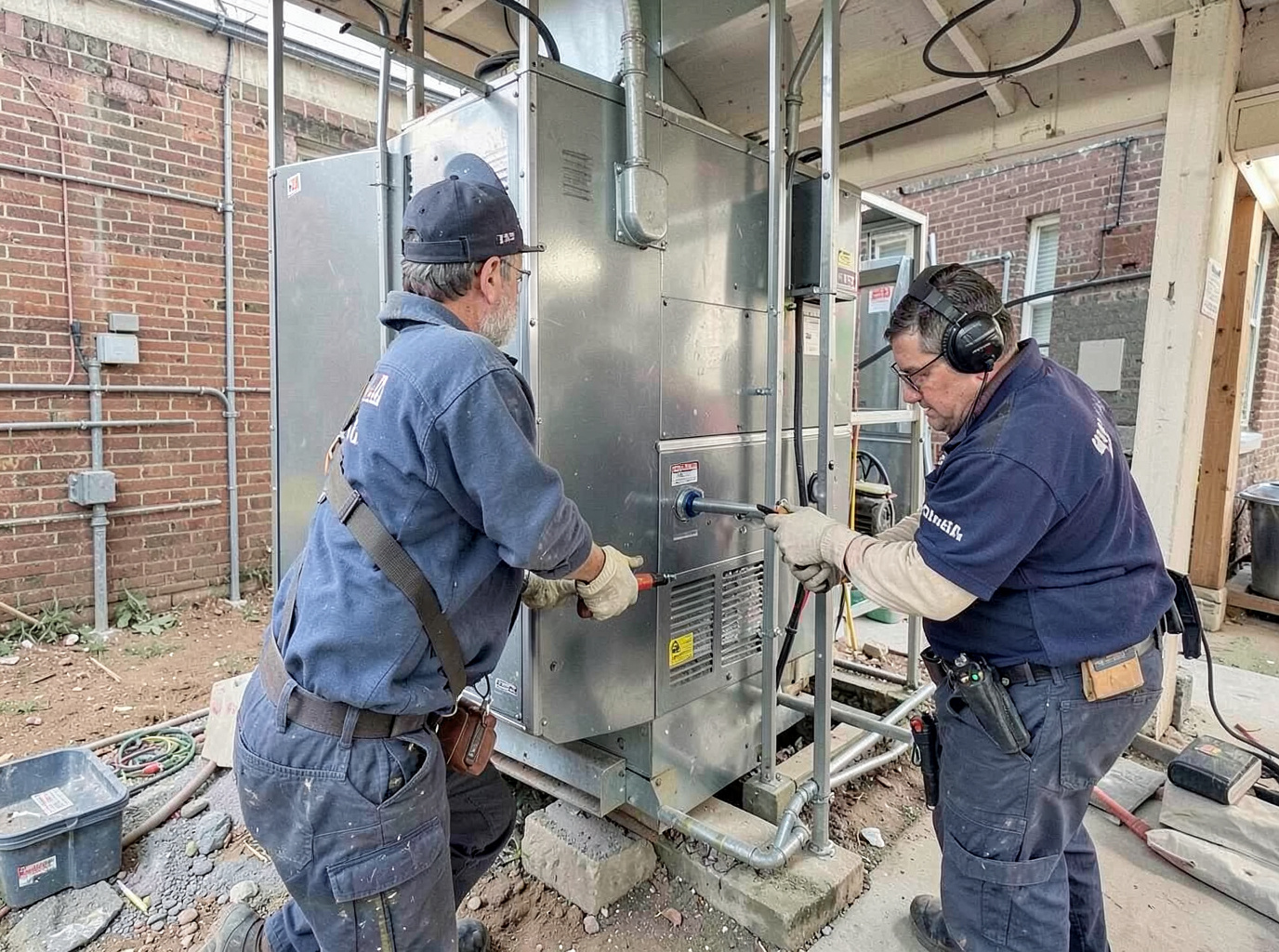
Jersey City's housing stock is unusually varied. Journal Square, Bergen-Lafayette, and Greenville are full of pre-war brownstones and two- and three-family houses, many of which were never designed for central air. Ductwork often has to be routed through joist bays, closets, or dropped soffits, and the existing trunk line is frequently undersized. Downtown and the Newport waterfront have newer high-rise and townhouse construction, but those units bring their own constraints, such as limited roof access and building rules for outdoor equipment. Sizing starts with a room-by-room load calculation, not a square-footage rule of thumb. We measure window area, insulation levels, top-floor exposure, and orientation before recommending a tonnage.
New Jersey summers bring sustained humidity, and an oversized air conditioner short-cycles. It cools the air quickly, shuts off before it has pulled moisture out, and leaves the house clammy even when the thermostat reads correctly. Winters along the Hudson can swing from mild to well below freezing, which matters when choosing between a heat pump with backup heat and a gas furnace. Installs should follow the manufacturer's installation manual and local permitting rules, since many municipalities require permits for equipment replacement and for gas or electrical work. Duct sealing, a condensate drain with a proper termination, and refrigerant charging verified by manufacturer method rather than guesswork separate a lasting installation from an expensive callback.
Outdoor condenser placement is a real challenge on tight Jersey City lots, where units end up close to property lines, fire escapes, or areas that flood during heavy rain. Pad height, service clearance, airflow, and noise near bedroom windows all need attention. Salt air and road salt accelerate coil corrosion, so coated coils or a more protected location can be worth discussing. Before ordering equipment, we check gas line capacity, venting requirements for high-efficiency furnaces, and whether an older electrical panel can support the new load. Finding those problems at the quote stage costs far less than finding them on install day.
Technician insight
In Jersey City, the thing that catches most people out with HVAC installation is assuming the old ductwork and electrical service will just work with new equipment. In older brownstones and multi-family houses, the trunk may be undersized and the panel may be near capacity, so the job grows once the walls are opened. Ask for a load calculation and a clear list of what sits outside the equipment price before you sign.
HVAC Installation Services We Offer
✓Central Air Conditioning Installation
A properly sized central AC system cools evenly across floors and keeps humidity under control, which matters in humid Hudson County summers. We match the condenser and coil to your existing or redesigned ductwork.
✓Heat Pump Installation
A heat pump handles both cooling and heating from one outdoor unit, often lowering yearly energy use compared with separate systems. We confirm cold-weather performance and backup heat needs before recommending one.
✓Gas Furnace Installation
A high-efficiency gas furnace is a proven choice for cold New Jersey winters. We check gas line sizing, venting, and combustion air requirements so the installation runs safely and efficiently.
✓Ductless Mini-Split Installation
Ductless systems suit older row homes and additions where ductwork is impractical. Each indoor head controls its own zone, so rooms that run warm or cold can be balanced without major construction.
✓Ductwork Modification and Sealing
Leaky or undersized ducts waste conditioned air and cause uneven rooms. Sealing and resizing key runs often improves comfort more than upgrading equipment alone.
HVAC Installation Cost in New Jersey, Jersey City
| Service | Typical Range | What Affects It |
|---|---|---|
| Central air conditioning system replacement | $5,000–$9,000 | Tonnage, SEER rating, and whether existing ductwork can be reused drive the price. |
| Heat pump system installation | $7,500–$14,000 | Cold-climate performance rating, backup heat, and electrical service upgrades move the total. |
| Gas furnace installation | $3,500–$7,500 | Efficiency level, venting changes, and gas line work affect the final figure. |
| Single-zone ductless mini-split | $3,500–$6,500 | Indoor head count, line set length, and wall or outdoor pad work change the cost. |
| Ductwork modification and sealing | $1,000–$4,000 | Length of runs, access through finished walls, and the number of registers affect pricing. |
Ranges are typical for New Jersey, Jersey City and confirmed with an exact written quote before any work starts.
How it works
- 1
Load Review and Site Visit
We walk the home, measure rooms and windows, check insulation and existing ductwork, and note the location of the gas line, electrical panel, and proposed outdoor unit site.
- 2
Equipment Options and Written Quote
You receive a written, itemized quote showing the recommended equipment, labor, ductwork or electrical changes, and any permit costs listed separately, along with the reasoning behind the sizing.
- 3
Permits and Scheduling
Where a municipal permit is required, we coordinate the paperwork and schedule the work around your availability. We confirm the start date and the scope before anything is ordered.
- 4
Installation, Startup, and Walkthrough
We install, verify refrigerant charge and airflow against manufacturer specifications, test safety controls, and walk you through the thermostat and filter maintenance before we leave.
Pricing
Every quote is written and itemized before work begins, with equipment, labor, ductwork, and electrical changes listed separately so you can compare options honestly.