
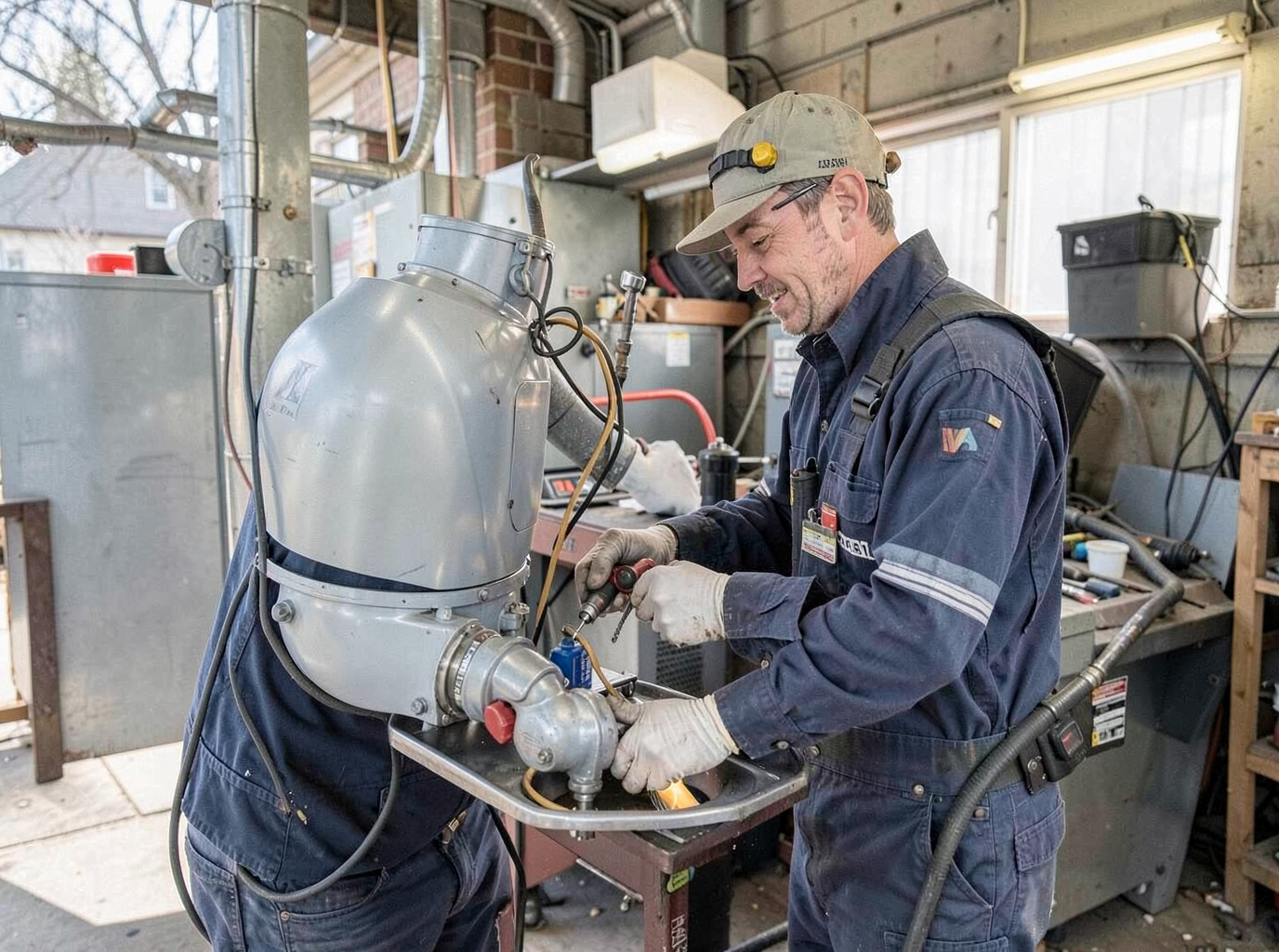
Jersey City's housing stock shapes a lot of AC calls. Many homes in Downtown, Journal Square, and the brownstone and row-house blocks of Hamilton Park and Bergen-Lafayette were built long before central air was standard. The systems we find are often retrofits: a condenser squeezed into a narrow side yard or perched on a rooftop, refrigerant lines routed through old chases, and air handlers crammed into basements or closets. When a unit trips or stops cooling, the first job is to work out whether the fault sits in the outdoor condenser, the indoor coil, the refrigerant circuit, or the electrical controls. Hudson County summers bring long humid stretches, which keep compressors running hard and expose weak capacitors and clogged coils quickly. A proper repair starts with pressure readings, amp draw, and airflow measurements, not a quick refrigerant top-off.
Refrigerant and code realities matter here. Older systems that still use R-22 are being phased out, and repairs on them are expensive because the refrigerant is scarce and costly, so a leak repair can make less financial sense than replacement. Newer equipment uses R-410A, and the industry is moving toward lower-impact refrigerants such as R-454B and R-32 under federal rules. A technician should never simply add refrigerant without finding and fixing the leak, because the charge will escape again and you will pay twice. In older multi-family buildings, condensate drains often clog, and water can end up in ceilings below before anyone notices. Permit requirements for replacements vary by municipality, so ask whether the job needs one and who pulls it before you agree to anything.
Waterfront blocks near Liberty State Park and the Greenville side of town see more moisture and airborne grit than inland neighborhoods, which shows up as corroded condenser fins, worn fan motors, and coils that restrict airflow sooner than expected. Seasonal timing also matters. Calls spike on the first real heat wave of June and again in late August, when systems that have been running all season finally fail. If your unit is making a loud buzz, short-cycling, or blowing warm air only in the afternoon, do not wait for the next heat wave to call. Early diagnosis is usually cheaper, and it gives you time to compare repair and replacement options calmly. Our Saturday morning window, from 9am to 2pm, is useful when a weekday schedule is hard to keep.
Technician insight
In Jersey City, the thing that catches most people out with air conditioning repair is topping off refrigerant without finding the leak. A unit that needed a recharge last summer will often need one again within a season, and each cycle costs more. I also see clogged condensate lines in older Downtown and Journal Square buildings that cause ceiling stains long before anyone thinks to check the drain. Ask the tech to show you the pressure readings and the drain test, not only the bill.
Hamilton Park Row House with a Recurring Low-Cooling Complaint
The homeowner had a second-floor system that blew lukewarm air every afternoon and had been topped off twice in one season. On inspection, the outdoor condenser fan motor was drawing high amperage and the coil was packed with grit from the nearby street. We replaced the motor, cleaned the coil, and checked the refrigerant charge against the manufacturer's specification. The system held temperature through the next heat wave, and the homeowner had a written record of what was done.
Air Conditioning Repair Services We Offer
✓Capacitor and Contactor Replacement
Capacitors and contactors are the most common failure points on hot summer days. Replacing a worn part quickly restores cooling at a fraction of the cost of a new system.
✓Refrigerant Leak Detection and Repair
We locate the leak with electronic detection and pressure testing, repair it, and then recharge to the manufacturer's specification. This stops the cycle of refilling a system that keeps losing charge.
✓Frozen Evaporator Coil Repair
A frozen indoor coil usually points to low airflow or low refrigerant. We find the root cause, whether it is a dirty filter, a failing blower, or a leak, so the ice does not return.
✓Condenser Fan Motor Replacement
A failing outdoor fan motor can overheat the compressor if left alone. Replacing it promptly protects the more expensive compressor and keeps the system running safely.
✓Thermostat and Control Board Repair
Thermostats that stop responding or boards that cycle the system unpredictably can look like major failures. Diagnosing the control side first often saves an unnecessary part swap.
✓Condensate Drain Clearing
A clogged condensate line can shut the system down and leak into ceilings or floors. We clear the line, test the float switch, and check for slope problems that cause repeat clogs.
✓Outdoor Condenser Coil Cleaning
Dirt and fine grit on condenser coils reduce heat transfer and raise energy use. Cleaning restores airflow and helps the system hold its rated capacity through the hottest weeks.
Air Conditioning Repair Cost in New Jersey, Jersey City
| Service | Typical Range | What Affects It |
|---|---|---|
| Diagnostic visit | $75–$150 | Ask whether the fee is credited toward the repair if you proceed. |
| Capacitor replacement | $150–$400 | Depends on capacitor rating, unit size, and access to the disconnect. |
| Contactor replacement | $150–$350 | Voltage rating and rooftop or side-yard access move the price. |
| Condenser fan motor replacement | $400–$900 | Motor size, dual-voltage requirements, and whether the condenser must be lifted. |
| Refrigerant leak repair and recharge | $300–$1,500+ | Leak location, refrigerant type, and whether the coil or line set must be replaced. |
| Condensate drain clearing | $100–$250 | Line accessibility and whether the float switch or drain slope also needs correction. |
Ranges are typical for New Jersey, Jersey City and confirmed with an exact written quote before any work starts.
How it works
- 1
Phone Diagnosis and Booking
Describe what the system is doing: noises, cycling, warm air, water, or breaker trips. We will tell you what is likely and whether a same-day visit makes sense, and we will confirm the diagnostic fee before we arrive.
- 2
On-Site Electrical and Pressure Check
We test voltage, amp draw, capacitor health, and contactor condition, then measure system pressures and airflow. The goal is to identify the failed component or circuit, not to guess at it.
- 3
Written Upfront Quote
Before any work begins, you receive a written quote listing the parts, labor, and any follow-up items. You decide whether to proceed, and nothing is added without your approval.
- 4
Repair and Test Run
After the repair, we run the system through a full cooling cycle and confirm temperatures, pressures, and drain function. We explain what was fixed and what to watch for in the coming weeks.
Pricing
Most air conditioning repairs in New Jersey fall into a predictable range once the failed part is identified. Diagnosis is the variable that matters most, and a clear written quote before any work begins is the standard we hold ourselves to. Costs rise with unit size, rooftop or tight-access installs, and whether refrigerant must be recovered and recharged.